

Disruptive Inclusion: Scaling Operational Excellence Through Access
THANK YOU FOR CALLING PODCAST: EPISODE 1
In the world of B2B operations, "efficiency" is king—yet millions of Deaf and Hard-of-Hearing consumers are currently locked out of the standard customer service loop. In this episode, Vannessa LeBoss, COO of 360 Direct Access, breaks down how 360 is disrupting the status quo. We explore the transition from fragmented "check-the-box" tools to a wrap-around technological solution that integrates seamlessly into the contact center. This isn’t just about being "nice"; it’s about operational excellence, revolutionary tech, and capturing a market the rest of the world has ignored.
“Thank You for Calling” is a powerful storytelling podcast that shines a light on the Deaf experience while challenging businesses to rethink accessibility. Each episode features candid conversations with Deaf community members sharing their most jarring experiences navigating a hearing-first world, alongside hearing leaders from Fortune 500 companies who are reimagining customer service for inclusivity. Together, these voices reveal both the barriers and the breakthroughs, highlighting why direct sign language access isn’t just the right thing to do, it’s the future of customer experience. Short, powerful, and thought-provoking, this is the call every leader needs to answer.
Transcript:
Michelle: Hello, hello, hello, and welcome to Thank You for Calling, the podcast that is challenging businesses to rethink accessibility through candid stories from the Deaf community and the Fortune 500 leaders who are reimagining the future of customer experience. We're kicking off Episode 1 entitled Disruptive Inclusion, exploring how scaling operational excellence through direct sign language access is the breakthrough that every leader needs to answer.
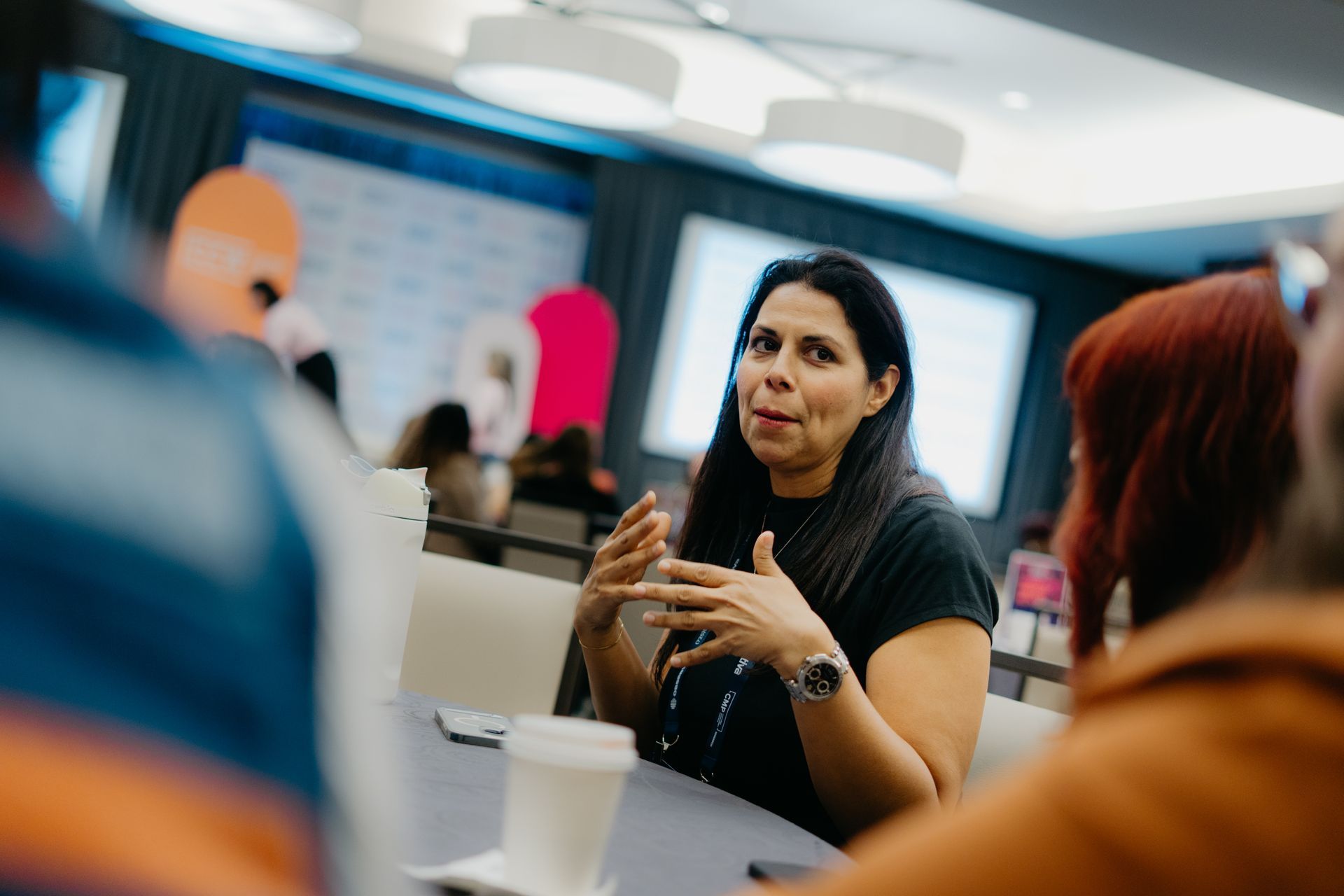
What does it actually take to bridge the accessibility gap on a global scale? Our guest today, Vannessa LeBoss, has the answer. She is the co-founder of 360 Direct Access and a powerhouse in the direct video calling technology. Whether she is presenting at the FCC's spotlight forum on DVC or direct video calling or applying her CPACC certified expertise and accessibility core principles, Vannessa is on a mission to prove that inclusive design is just good business. With two decades of executive experience, she's here to show us how to engineer impact. Vannessa, welcome to the show.
Vannessa: Hey, thank you for having me. I appreciate it. I feel very honored that I get to be the first guest on this podcast. We are so happy to have you here. This leads us to our kickoff discussion about disruptive inclusion. So, I'd like to start off by talking to you about your experience and your journey. Learn a little bit more about who you are before we dive into this discussion. So the first question I have for you is you spent years as a COO of one of the largest sign language agencies in the country. What was the breaking point or a specific gap that you saw in that traditional model that led you to co-found 360 Direct Access? So essentially, um my background as you said, is I have been in and around the Deaf community and interpreters for the majority of my life. My mom was a certified in sign language interpreter, my sister, but I actually never learned sign language myself. I was one of the youngest kids in my family and when an interpreting agency got founded, I started working for it on the business side. And so my 18 years there from high school, college, all the way through, growing this company from two people to 12, to I think when I resigned, we had 258 employees and over 800 contractors across the country. And everything I lived and breathed was interpretation for the Deaf community. And therefore I thought this is, I'm doing the best thing. I'm so inclusive and I'm making such an impact by sending interpreters out. And yes, they do make an impact, but it wasn't until we had in-house deaf employees that joined our company. And I realized I was scheduling an interpreter for myself for every meeting just to communicate with some Deaf employees. And then also the gap that I had never realized was occurring in their everyday lives.
Michelle: Wow. To over 250 employees and 800 contractors, that is a large staff to manage. So you had a big company to manage with a large staff, a lot of moving parts. That experience up until now with sales, finance, HR, and all these different things, how do you make sure that each part of those processes are accessible? That accessibility is really woven into the fabric of the DNA of the company because that's not easy to do. So, how did you use your experience or what you knew and what you didn't know to ensure that accessibility is part of all these processes in the company?
Vannessa: I think that my role with accessibility in organizations leading up until now has been hit and miss. I think that in my heart I was always like, "Yes, we're accessible. Yes, accessibility is important." And of course, when we hired Deaf employees, we scheduled interpreters. And we always made sure to get feedback from our Deaf employees about new things we were going to offer and um new launches we were going to make. And we would pull and kind of find out. But I also realized there were things that we were doing that weren't accessible. Sometimes we were like, "Oh, the Deaf team." And it was like, "There's our Deaf team." And I'm like, "Well, we don't call it the hearing team. Why are we in corporate meetings or executive meetings like our Deaf team?" And also thinking that the interpreters were for the Deaf people in the room. But essentially, I didn't know sign language. So, the interpreters were just as much for me as they were for them. And so, I think over the years, probably the last 10 years has really been the most eye-opening. That's when I got my CPACC certification. That's when I really feel like inclusion and accessibility were touching every aspect of what I did, instead of parts of what I did thinking I was doing a great job. I didn't really know what I didn't know over those years. And if I hadn't had those 20 years of experience, I wouldn't be where I am today.
Michelle: So this leads to today at Frost and Sullivan's The Fix. You highlighted massive gaps in the Deaf community's customer experience. In your view, why has the B2B world been slow to realize that traditional telephony is an operational failure for millions of customers?
Vannessa: I can, I know why the business world isn't succeeding in communicating with Deaf customers and it's because one there's a gap in knowledge of how many customers there really are and so when you have a really really really small space you kind of think well, we're doing good enough. And good enough to many people is a TTY, and I still I cannot believe how many businesses I see as their accessible service, a TTY. And it's funny cuz I typed on a TTY with Deaf clients um in 1994 and I also used a pager in 1994, neither of which are used now. And we haven't kept up with it. If you go back and look at the ADA, a lot of people aren't, or if you look at advancements from the FCC, um it's just not a focus. And now I saw I see companies still with TTYs and then I see call 711. Everyone's like just call 711. It's a relay service. They'll take care of you. And then the video relay service came out in 2001. You know I wouldn't want to use my phone from 2001. There is good services within it. But we are in 2026, and technology has brought about innovation. Businesses don't know. And it's fine. I'm happy now that I know what I know to do education as much as I can. I'm asked to present at least five, six times a year. But essentially the gap is there are over 2 million Deaf people who utilize sign language as their primary language in North America, US, Canada, and that's just American Sign Language. There's 70 million Deaf that rely on sign language as their communication globally. And there are different foreign sign languages and that's a separate podcast probably, but essentially businesses don't know that to reach them is a struggle for every Deaf person I know and when I've been in meetings and I've seen the struggle and I you know I've seen that I've called my insurance company for a claim and I've been able to file a claim, make an appointment about 20-25 minutes. I've also seen my colleague who's Deaf, our CEO, you know, or co-founder, and he was on with his insurance company for six hours, lost almost an entire workday struggling between VRS interpreters, who unfortunately they're amazing. You know, my family, they all do VRS interpreting, but they don't know the business they're calling. They don't know anything about that insurance company. They may not even know insurance terms. An insurance company would never hire someone that doesn't that they don't train. What's our culture? What's our, what are our terminology? How do I answer these questions? But unfortunately, they're relying on interpreters that don't know them to facilitate this communication. And it results in a lot of errors and a lot of mistakes, a lot of unnecessary escalations that cost these companies money, but it's not being tracked. Same thing. So, even if they call through the relay service, a Deaf person may have to call five, six, seven times before they get a resolution. And when they're on a call, like Craig was on a call for 6 hours, he must have gone through over 20 interpreters during that time. So each time he switched, they were starting from scratch and they had to kind of start all over again because that interpreter had no idea what they were walking into. Then you flip and go, well, I have companies that say we have online chat and this is so accessible. Look, we're putting it in English. Not realizing sign language and English are two completely separate languages. In England, they speak English, but they do not use American Sign Language. Sign language is not a visual part of a spoken language. It is a completely separate language. So now, when you're doing online chat, you're expecting that your deaf customers speak English as fluently as they speak their primary language. And that just isn't the case for the majority of the Deaf community. it's a second, sometimes even third language. So, they might be able to start an English chat, but it's going to hit a ceiling and not be successful. So, I really think that's the answer is businesses just don't know how much it's costing them to do these calls and how ineffective they are. They're just technology from 20, 30 years ago.
Michelle: I'm so glad that you mentioned about switching of relay interpreters, because that's something I've experienced myself as well. Often times I think my message has gotten across, but the interpreter didn't have the institutional knowledge to accurately convey the information. So, that causes confusion, delays, escalation, even with the 20 minute interpreter limit causing conversations to start all over again with new interpreters. I've been there. Operational failures are often because businesses don't know what they don't know. And that has a bigger impact on the Deaf consumer than they think.
Vannessa: It's funny. I'll actually add one more thing. In addition to the customers having a difficult time and the business is not realizing how much it's costing them, the agents know. I've been to contact center conferences and someone will say, you know, now they're an executive and they're way high up, but they'll say, I started as an agent. Oh my gosh, I remember getting those calls. Oh my goodness, they were horrible. They were so hard. They were ineffective. And they know the struggle and how difficult it was. But how often are companies speaking to the reps and saying, "Hey, how are how are you handling video relay service interpreted calls?" Or they'll say, "Oh, that TTY line never rings." And I'm like, "Well, yeah, neither does your pager. That doesn't exist." So, sometimes it's at the grassroots level that it's known, but the leadership level of a company doesn't know. Doesn't know how difficult these calls are, doesn't know how often they're failing, doesn't know what escalations are costing them. So, the agents often do know and they admit that they're uncomfortable with these calls. I think it's a statistic like 76% of agents do not like handling these sign language interpreted calls because they feel uncomfortable and their goal is just get off them as quickly as possible because they don't feel comfortable handling them. Just wanted to add that.
Michelle: Absolutely right. This leads me to my next question. So for those that don't know, why is DVC a revolutionary jump over the relay systems and TTY services we've seen for decades?
Vannessa: Direct video calling is a relatively new term. I would say it definitely has come out just in the last maybe eight years or so. And essentially it's finally an equivalent to the conversations I have every day. So, every single day I can call an airline, I can call a credit card company, and I'm going to hear press one for English, press two for Spanish. I now hear sometimes, press three for Portuguese or four for French. You know, we're starting to get into some other spoken languages, but that's more because it's it's vocal and people understand it. Um, but there is no press here for sign language support. And what direct video calling does is it actually does a point-to-point call, a direct native language call between a deaf person and a trained deaf agent within the company. So if you think about it, Spanish language options didn't really come in until the late 80s, early 90s. It used to be, you just called and got an English representative to any company you called. And then of course the Spanish population grew, the need was there and they realized trying to do an interpreter wasn't successful. So now, when you press two for a Spanish representative in the US, you don't connect to an interpreter, you connect to a Spanish-speaking representative. And that's very commonplace to us. No one questions it. Why, when American Sign Language is the third most popular foreign language in the United States, why are we still relying on third-party interpreters? We don't have to. Direct video calling allows a video platform in any company to be used and a deaf customer service rep, a sign language, native sign language user to connect with that deaf customer and therefore give a one call resolution, handle their call. They're trained exactly the same training as any other uh contact center agent would go through. And now they're on video. They're doing sign language. And you know, if I didn't know sign language or someone who's hearing didn't know it, they would never hear that call because it's done entirely in sign language. And it's a point to-point native language call. And direct video calling replaces everything because TTY were English-based and you had to type. You know, that 6-hour call that Craig was on probably would have been 10 hours back in the day on TTY days. Relay service interpreters, I have literally had come up to me after presentations saying, I fully support this. Interpreters are so stressed out and the VRS calls with businesses are very hard now. When they're doing relay calls with a family member or they're just having conversations, that's exactly a great use for the relay service. It'll never go away. We'll always need interpreters to connect people who sign and don't sign. But when it comes to the contact center world, when you have native language users and deaf customers that you know, millions that are trying to connect with you, there's a simple solution and that's that direct native language connection. You don't have to rely on the outdated tools that aren't really successful anymore.
Michelle: And before I get to the next question that I have for you quickly, you mentioned about how some leaders have themselves worked as agents interacting with Deaf callers and having that direct Deaf to Deaf support provides unmatched access and clear communication. So what about AI? We're not going to go too deep into this topic, but could you touch on how DVC is still relevant with chat bots and sign bots, especially for those who may think that chatbots and signbots might be simpler?
Vannessa: Absolutely. So, AI is playing a big role, at least within the company I work for, in the aspect of equivalency. So, right now if I call an airline, I kind of have a few options. I mean, I can keep pressing buttons or keep saying representative until I'm forced to get to a live person. Um, but I could start with their bot, right? Their chat bot or their audio bot that says, "Why are you calling?" And I'm like, "Oh, I need to change my flight." Um, sometimes it works, right? Sometimes I can go right through the chat bot. I can give my verbal responses. They give their responses and sometimes it's successful. Sometimes it still results in like, "No, you didn't get to what I needed." And I need to connect to a live representative. We are accomplishing the equivalent with direct video calling. And so we've been doing sign language avatars. Um we've been doing sign language recognition to the point now that we have a really awesome demo where essentially someone could call in and the first person they see isn't a live person. Um, but the first quote person that they see is actually like a signing avatar and it might say, "Hi, thank you for contacting XYZ Acme Company and why are you calling today?" And if they're calling with a question about their bill or a simple repair question or kind of the frequently asked questions of why a lot of people call in, the signing avatar will output the information in sign language. The sign language recognition tool we're embedding into our video platform will read the person's response and if it's understood they can do that troubleshooting right there based on their reply. The signing avatar would go, oh this is what you answered, this is the solution and they can do troubleshooting back and forth, though there is always a button on that video platform that says I need to speak to a live representative. So companies can utilize AI technology and maybe if they're and they don't know how many calls they're getting. Separate question, but let's say they're getting 5,000 calls a month. Um maybe 1,500 of those can be filtered out by a troubleshooting um AI signing bot and signing avatar. And then now you're using less seats, less Deaf representatives that are live because those simple questions were answered. Um so we're still combining. You're never going to get rid of the human altogether, at least not in my lifetime, but you are able to filter out and not necessarily be utilizing live representatives for things that could be handled by a signing avatar and sign language recognition. And we won a grant for that and we've been working on it tremendously. So, it's been awesome.
Michelle: That's amazing, to have sign language avatars and bots. That seems unheard of. To combine that with DVC and sign language recognition technology, it's truly remarkable. So you describe 360 Direct Access as a wraparound solution. Operationally, what does that look like for a massive corporation? Is it a plug-and-play disruption or a total overhaul of their contact center?
Vannessa: I really hope we have people from other countries listening to this, because there's benefits in each country and in different ways. But the benefits to businesses, there's no, there's no downside. So, when businesses are implementing direct video calling, these are the benefits they're getting. Like 50% reduced average handle times, who doesn't want lower AHT? These calls can be cut in half when a native language communication and not a relay interpreter are interpreting these calls. We also find a tremendous amount of loyalty when the Deaf community and not just the two million in North America or the 70 million globally, but also their sphere of influence, which is me, right? If I know there's a product out there for for Deaf people, I'm going to start using it. So, the Deaf community, the heart of hearing community, the sphere of influence, it just gets bigger and bigger. Builds a lot of brand equity. And on the flip side, when they're not accessible and they're not easy to reach, you just don't want to keep working with them and you're going to leave and go somewhere else. So, you know, reduced average handle time. A lot of companies in the US will say, "Well, relay's free. Um, at least the relay interpreters, they don't cost me any money, but they they are costing you money. I promise you that. Those seven calls and those six-hour call times are costing you money because even if the relay interpreter is covered by the FCC, you're still paying that English-speaking uncomfortable rep to sit and answer that call. So, you are still paying a representative. You're just paying a hearing representative that's having a big challenge with that call, instead of paying a Deaf representative to have a really easy time with that call and do a one call resolution. So, that's another benefit. One call resolutions. We see 93 to 96% customer satisfaction ratings. We've had people cry on calls when they've connected to a direct video calling rep. They're like, "You're not an interpreter." And they'll literally grab family and friends that are in the house and show them, because it's like finally finally an equitable experience. And in other countries that don't even have a video relay service, businesses are paying for both. They're paying for the interpreter, the relay interpreter, and they're paying their rep. They're experiencing two times the cost for every call, plus all the things I just listed. So, in those countries, we're like, man, you're you're really going to be saving a lot of money. So, cost savings shouldn't be the focus. Accessibility, equitable experiences should be the focus, but man, what company doesn't want cost savings on top of that? And so, direct video calling really is a win-win. It's creating jobs for the Deaf community. It's reducing the stress on interpreters, on the agents. You're getting a native language call. You're getting all these reduced average handle times and one call resolutions and loyal customers and brand equity. There is absolutely no downside to it which is why I left a corporate job doing very well there to found 360 Direct Access because I actually see now after seeing through my hearing lens and then seeing through my Deaf colleagues lenses how impactful it is and how big that gap really is that I didn't really know about before as a customer. I can definitely see this being revolutionary for so many of us in the community.
Michelle: So, you spent 20 years in the space and if we look 5 years into the future, what is the one legacy technology or standard you hope every major contact center in the world has adopted?
Vannessa: I just hope every contact center realizes how simple it is to connect. You know, when you can have a web RTC video platform with features connecting these callers. My goal is that in five years we see that sign language support button and it's not connecting to an interpreter. It's not connecting to an English-based chat. It is connecting to a trained Deaf representative to answer that call. I, it's not even a dream. I truly believe it's the future. I think we're going to look back and see things like this exactly the same way probably Spanish customer service was in the late 80s and early 90s. But in this case, it's an equitable experience. It's an accessible experience. It's a job creation. So, five years from now, I want to see that sign language support button on every major company's website. I want to see it on small company's website. Sometimes small companies get such a small volume of deaf callers. They want to be accessible, but they can't do the price tag of a dedicated representative. And actually, we thought of that because my entire team is deaf and they're solving their own problem. And we have shared representatives. So we implemented where you know we can have answering services or shared reps that might support a dozen different companies and everyone's little volume adds up to a lot and therefore they still get services. So it doesn't matter what size business you are in 5 years. I would love to see that sign language support button on every website um every connected phone call that a deaf person makes. They're able to have that option.
Michelle: Me too. As a deaf person, I can see the impact that this will have on job creation for the community as well. For those watching this, I hope you keep in mind everything Vannessa has explained on how DVC and revolutionary inclusion can have a big impact on many communities. This isn't just about companies and their ROI or statistics of reduced call times along with other benefits, but also the impact it'll have on real people and their lives in a world of surrounding AI and job loss. This is a huge standard of where we're going in the future. Bridging technology and human-centered design. Thank you, Vannessa, for bringing your perspectives and sharing your stories. I enjoyed talking with you today. Thank you. For everyone watching, please make sure to tune in next time. Until then, thank you for calling.
Recent Posts